
What are the signs of a blocked drain?
The most useful clue is the pattern. One slow fixture often points to a local waste pipe, while several affected outlets or a full outside chamber suggest a blockage further down the drainage run.
Common warning signs include water draining more slowly than usual, a toilet level rising before it falls, gurgling from plugholes, persistent drain smells and water appearing around an outside gully. If a manhole is accessible and safe to view, standing wastewater can confirm that flow has stopped beyond that point.
The symptoms may come and go at first. A partial blockage can let small amounts of water pass, then struggle when a washing machine empties or several fixtures are used together. That intermittent behaviour is still worth investigating because it often becomes a complete blockage later.
- Slow sinks, showers or baths
- Gurgling toilets or plugholes
- Bad smells inside or outside
- Wastewater rising in a gully
- A full or overflowing inspection chamber
What is most likely to be causing the blockage?
The obstruction is often a combination of everyday waste and a pipe condition that gives it somewhere to catch. Clearing the material solves the immediate problem, but the cause matters if it keeps happening.
Fat and oil can coat a kitchen drain, then trap food particles until the bore narrows. Wipes and sanitary products do not break down like toilet paper and can form a dense plug. External lines collect silt, leaves and building debris, while roots enter through gaps and create a net that catches passing waste.
A displaced joint, low section or fracture can also interrupt flow. In those cases, simply forcing a hole through the blockage may give temporary relief without correcting the underlying defect. Repeated blockages in the same place are a strong reason to consider a CCTV survey.
Is a blocked drain an emergency?
It becomes urgent when sewage or wastewater is backing into the building, an outside chamber is overflowing, toilets cannot be used, or the problem threatens a business operation.
If water is still draining slowly and there is no overflow, you may have time to arrange a normal appointment. Stop adding unnecessary water and submit the details promptly. If sewage is entering a room or external area, keep people and pets away, avoid contact and make the urgency clear in the enquiry.
Where the blockage appears to affect several properties, it may be in a shared drain or public sewer. In that case Severn Trent may be responsible, so checking with neighbours and the water company can prevent delay.
How are blocked drains cleared?
The clearing method depends on the obstruction, pipe diameter, access and condition. Rodding, mechanical cleaning and high-pressure jetting each have a place.
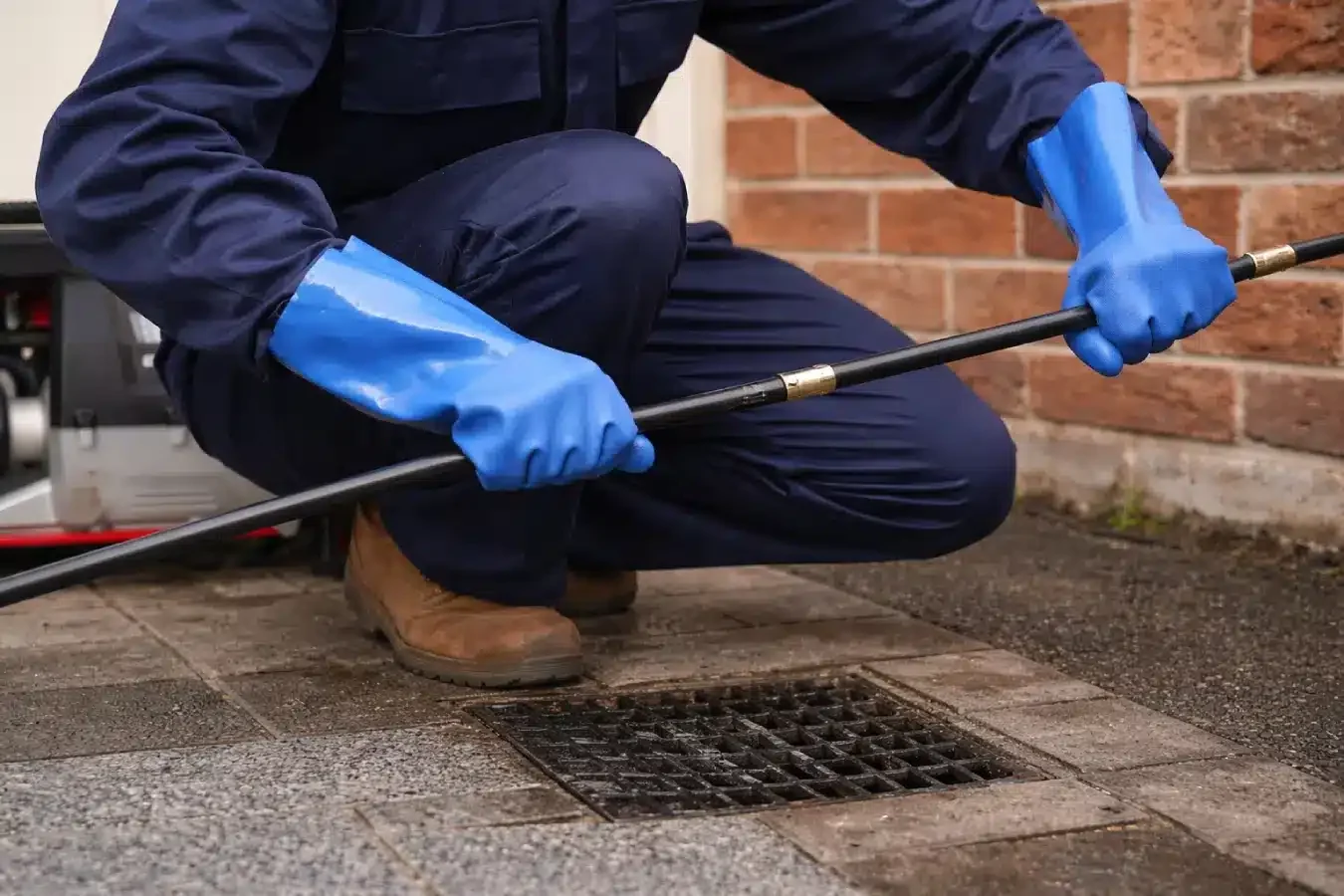
Rods can break through or retrieve a simple blockage from a suitable chamber. Mechanical machines are useful in smaller pipework and around bends. Jetting uses controlled water pressure to cut through deposits and flush loosened material along the line. A camera may be used before or after cleaning where the route is unclear or damage is suspected.
A responsible visit finishes with a flow test. Water should move through the relevant chamber without immediately backing up. If the line cannot be fully cleared, or the equipment repeatedly meets a hard obstruction, the next step should be explained rather than disguised as a completed job.
Can I clear a blocked drain myself?
A plunger or simple trap clean may solve a shallow sink or basin blockage. Underground drains, overflowing chambers and sewage problems are safer left to someone with the right equipment.
Do not enter a manhole or confined space. Drain gases, unstable covers and contaminated wastewater create risks that are easy to underestimate. Avoid mixing chemical cleaners, and tell the engineer if any product has already been poured into the system.
If you use rods, they must be turned in the correct direction so the joints do not unscrew inside the drain. Stuck or separated rods create a second obstruction and can make professional clearance more difficult.
How can future blockages be reduced?
Keep fats, wipes and food waste out of the system, clear external gullies and deal with recurring symptoms before the line fully blocks.
Kitchen grease should cool and go into the bin rather than the sink. Only toilet paper and human waste should be flushed. Outside, leaves and soil should be removed from gully grates before they wash into the pipe. Commercial kitchens may need planned cleaning because higher volumes of grease can build up even with good practices.
Prevention also means fixing defects. If a camera finds root entry, a displaced joint or a settled section, a targeted repair may cost less over time than repeated emergency call-outs.