
What does a CCTV drain survey show?
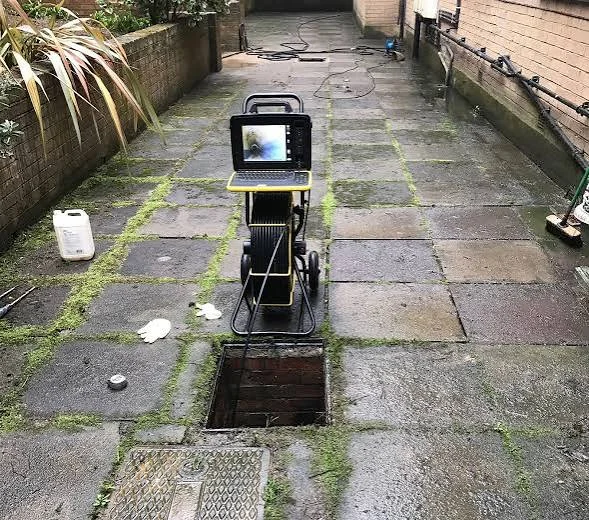
A drainage camera records the inside of accessible pipework. It can identify structural defects, obstructions and connections that cannot be judged from the surface.
Typical findings include root entry, cracks, fractures, holes, open or displaced joints, scale, grease, silt, foreign objects and sections holding water. The camera can also confirm pipe material, direction and branch connections where access allows.
A survey is most useful when the pipe has been cleared enough for the lens to travel and see the walls. Filming through dirty water or heavy deposits may produce footage but not a reliable diagnosis, so cleaning may be recommended first.
- Recurring blockage investigation
- Pre-purchase drainage checks
- Locating damaged pipework
- Planning repairs or extensions
- Checking work after cleaning or repair
When should I book a drain survey?
Book one when a problem keeps returning, a repair is being proposed, you are buying a property with drainage concerns, or planned building work could affect existing drains.
A first-time straightforward blockage may not need a full survey. If it clears cleanly and does not return, camera work could be unnecessary. By contrast, a drain that blocks every few months, accepts rods only to the same point or shows signs of root growth deserves a closer look.
For a home purchase, the survey can add information not covered by a standard building survey. It may reveal defects beneath drives, gardens or extensions that are expensive to discover after completion. The scope should be agreed, because a short problem-focused inspection is different from mapping every accessible run.
What should the survey report include?
The output should match the purpose. At minimum, you need clear findings, relevant footage or stills, the approximate location of defects and practical recommendations.
A homeowner investigating one blockage may need a concise explanation and estimate. A pre-purchase, insurance or construction survey may require a formal written report, annotated plan, defect grading and retained video. Ask what is included before booking so the result is suitable for whoever needs to rely on it.
Technical drainage terms should be translated. 'Joint displacement' means two pipe sections no longer meet smoothly. 'Root ingress' means roots have entered through a gap. 'Standing water' can suggest a low point, obstruction or poor fall, but needs context.
Can the camera locate the drain from the surface?
Often, yes. A sonde built into or attached to the camera can transmit a signal that is traced above ground, helping estimate route and depth.
Tracing is useful when a defect lies beneath paving, landscaping or a floor. It helps target excavation and can show whether a proposed extension sits over a drain. Accuracy depends on depth, ground conditions, access and nearby interference, so markings should be treated as practical guidance rather than a full utility survey.
Before excavation, other services such as gas, electricity and water still need appropriate checks. Drain-camera tracing does not replace safe digging procedures.
Do home buyers need a CCTV drain survey?
It is worth considering for older properties, homes with extensions, signs of previous drainage work, mature trees near the route or any history of recurring blockages.
The cost of a survey is small compared with discovering a collapsed drain after moving in. It can also provide evidence for further enquiries or price discussions, although it is not a guarantee that every hidden section is accessible or defect-free.
Shrewsbury property ranges from historic town-centre buildings to suburban and rural homes. Different ages and alterations create different risks. The decision should be based on the property, symptoms and surveyor's observations, not age alone.
Can a camera survey tell me who is responsible?
It can help show the route and where another property joins, but legal responsibility depends on whether the pipe is private, shared or part of the public sewer system.
A shared drain serving more than one property may fall under Severn Trent responsibility, even if part of it lies within a private boundary. The footage and route can support the conversation, but the water company confirms whether it owns the affected asset.
If the problem appears to lie beyond the private run, sending clear evidence to the responsible organisation can reduce repeated investigations.