
Is the blockage local to the toilet or sink?
If one fixture is affected and everything else drains normally, the restriction is often close to that outlet. If several fixtures are slow, the main drain may be involved.
A blocked kitchen sink may have grease or food residue in the trap and waste pipe. A basin can collect hair, soap and toothpaste. Toilets are commonly obstructed by wipes, sanitary products, excessive paper or objects. The location changes the equipment and access needed.
Listen for gurgling when another fixture empties. Check whether the outside gully receiving the sink or shower is overflowing. If an accessible manhole is full, the problem is unlikely to be confined to the room.
- One fixture only: local trap or branch pipe is more likely
- Several fixtures: check the underground drain
- Gurgling: air is being displaced by restricted flow
- Outside overflow: stop using the connected appliances
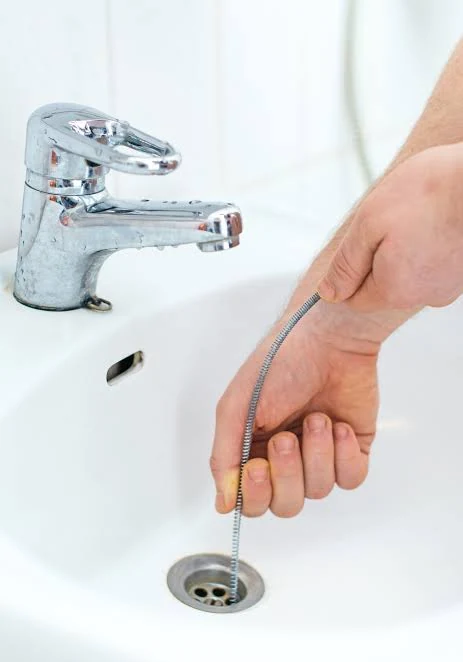
What can I safely try myself?
A plunger, trap clean or removal of visible hair may solve a shallow blockage. Stop if the fixture is overflowing, chemicals have been used or the problem affects several outlets.
For a sink, place a container beneath a removable trap, wear gloves and be prepared for dirty water. Clean the trap and reassemble the seals correctly. A cup plunger can move a soft blockage when the overflow is covered. Do not use excessive force on fragile fittings.
For a toilet, a proper toilet plunger is safer than improvised objects. Do not repeatedly flush to test it. Avoid pushing sharp tools into the pan, because they can scratch or crack the ceramic and may lodge the obstruction deeper.
Why should chemical cleaners be avoided?
Strong chemicals rarely fix deep or structural blockages and can create a burn risk for anyone who later opens the pipe.
Different products should never be mixed. Some reactions release heat or dangerous fumes. Chemicals can also damage certain seals and finishes, and they do not remove wipes, roots or a collapsed pipe.
If you have already used a cleaner, state the product and approximate time in the enquiry. That information helps the person attending handle the trap or wastewater safely.
Why does the toilet water rise before draining?
A rising water level means the outflow is restricted. If it eventually falls, the blockage may be partial, but it can still become complete without warning.
The restriction may be in the toilet outlet, soil stack or underground drain. If another toilet or outside chamber is affected, the main drainage line becomes more likely. A local toilet obstruction can often be cleared without excavating or removing the pan, but access and the object involved matter.
A toilet that repeatedly blocks despite careful use may have poor flow, an obstruction left in the line or a defect beyond the fixture. Recurrence is a reason to investigate rather than keep plunging.
Can a blocked sink indicate a bigger drain problem?
Yes, especially when the washing machine, dishwasher or another sink causes water to rise in the affected bowl or outside gully.
Kitchen branch pipes commonly hold grease, but the restriction may sit where the waste joins the underground drain. If the outside chamber is clear, mechanical cleaning of the internal pipe may be enough. If the chamber is full, outside drain unblocking is likely to be needed.
Bad smells after a sink clears can come from residue in the pipe or a trap that was reassembled incorrectly. The water seal must remain in place to stop drain gases entering the room.
When does an internal blockage become urgent?
It is urgent when sewage is backing up, the only toilet cannot be used, wastewater is entering the property or several fixtures are overflowing.
Stop using connected appliances and keep people away from contaminated water. If a business has customer toilets, food preparation or vulnerable occupants, explain that in the enquiry so the operational impact is clear.
A slow basin can usually wait for a planned visit. A toilet overflowing onto the floor needs immediate control and a prompt assessment.