
What is drain jetting?
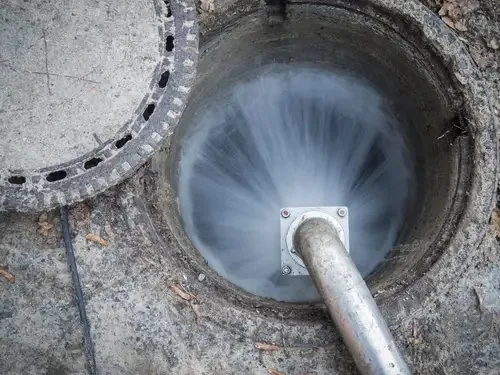
Drain jetting sends water through a specialist nozzle at controlled pressure. Rear-facing jets propel the hose along the pipe while cutting and flushing action removes deposits.
Different nozzles suit different jobs. A general cleaning nozzle moves loose silt and grease. More focused heads can tackle compacted material or roots, although the pipe condition must be considered before aggressive cleaning. Pressure alone is not the measure of a good job; nozzle choice, flow and operator control matter.
Jetting is commonly used on outside foul drains, surface-water runs and commercial lines. It can restore the internal diameter more thoroughly than simply pushing rods through the centre of a deposit.
- Grease and fat build-up
- Silt, sand and leaves
- Scale and soap deposits
- Soft root growth and debris
- Planned commercial cleaning
When is jetting better than rodding?
Jetting is often better when the pipe needs cleaning along its length, not just opening at one point. Rodding remains useful for simple reachable blockages and initial diagnosis.
A rod may create enough space for water to pass through a grease blockage, but residue on the walls can quickly catch more waste. Jetting washes material back to an accessible chamber or onward into a suitable system. It can also navigate some bends and longer runs more effectively.
The methods are not rivals. An engineer may rod to confirm the route, jet to clean it and then use a camera to inspect the result. The sequence depends on access and symptoms.
Can high pressure damage a drain?
Any powerful equipment can cause damage if used carelessly or on a pipe that is already failing. The line should be assessed and the pressure matched to its condition.
Older clay pipes, open joints and badly fractured sections need caution. If the camera or symptoms suggest collapse, forcing a jet hose past the defect may not be sensible. A lower-pressure cleaning pass or camera inspection may be safer.
A responsible operator controls the nozzle and monitors what returns to the chamber. The aim is to remove deposits without driving debris into an unsuitable connection or worsening a weak pipe.
Does jetting permanently stop blockages?
It can provide a thorough clean, but no honest operator should promise that every blockage will never return. Future use and structural defects still matter.
A grease-lined kitchen drain may stay clear much longer after jetting if fats are kept out of the sink. A root-filled line may block again if the entry point is not repaired. A low or displaced section can continue trapping solids even after it has been cleaned.
Where the cause is uncertain, a post-clean CCTV survey can show whether the pipe wall is sound and whether further action is worthwhile.
How is commercial drain jetting different?
Commercial systems often carry higher volumes and more grease, food residue or silt. Planned cleaning can reduce the risk of a blockage during trading hours.
Restaurants, pubs, schools, workshops and managed premises may benefit from maintenance based on actual use and previous incidents. The interval should not be invented. A heavily used kitchen line may need more frequent attention than an office block with low wastewater demand.
Work can be planned around access, customer areas and opening times. Waste handling, grease traps and the condition of connecting drains should be considered as part of the wider system.
What happens during a jetting visit?
The engineer confirms access and flow direction, selects a suitable nozzle, cleans the run and tests the result. Debris should be managed rather than left in an inspection chamber.
Before work, explain any previous repairs, suspected weak pipework or chemicals used. Covers are opened safely and the hose is introduced from a suitable point. The operator monitors the water and material returning, repeating passes until the line runs clearly.
If the jet cannot pass a fixed obstruction or the drain remains slow, the visit should move to diagnosis. A camera can distinguish a hard deposit from a displaced or collapsed section.