
What counts as a drainage emergency?
A drainage problem is urgent when it creates an immediate hygiene risk, prevents essential facilities being used or threatens damage to a property or business.
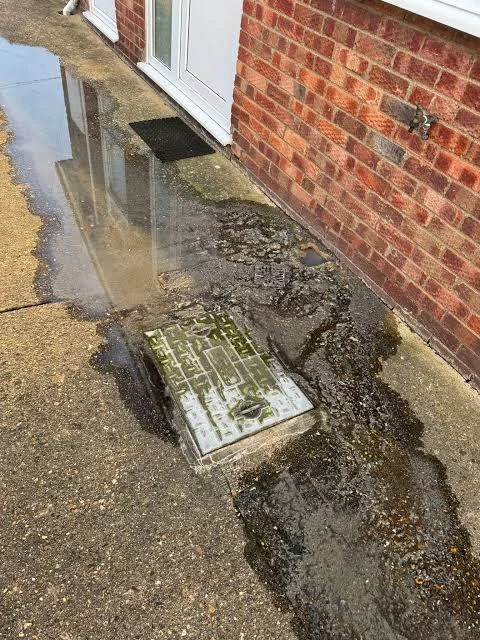
Examples include sewage rising through a toilet or shower, wastewater entering a room, an outside chamber overflowing near doors or public areas, and all toilets in a property becoming unusable. A commercial kitchen, care setting or public venue may also need priority treatment because closure and hygiene consequences escalate quickly.
A slow sink with no overflow is inconvenient but may not need an emergency response. Clear descriptions help distinguish the two. State whether sewage is visible, whether water is still rising and which fixtures are affected.
- Sewage backing into the property
- Overflowing manhole or gully
- No usable toilet in the building
- Wastewater threatening stock, electrics or public areas
- A blockage affecting several premises
What should I do immediately?
Stop adding water to the affected drainage system, keep people away from contamination and submit the details as soon as possible.
Do not flush toilets repeatedly to test whether the blockage has moved. Avoid running washing machines, dishwashers, showers or taps connected to the affected line. If safe, move possessions away from the threatened area and use barriers to keep children, customers and pets clear.
Do not enter a chamber or try to work in a confined space. If wastewater is near electrical equipment, avoid the area and isolate power only if you can do so safely. Photographing the overflow from a safe distance can help explain the scale of the problem.
Is 24-hour drainage attendance guaranteed?
The enquiry form is available 24 hours a day, but actual attendance and out-of-hours availability must be confirmed when the job is assessed. No promise should be made before the location, risk and workload are known.
This site is designed to collect enough information for a local drainage operator to respond appropriately. Genuine emergencies are prioritised, and same-day attendance may be possible, but the response time depends on where the engineer is, current jobs and the equipment required.
When a business eventually operates the site, its confirmed service hours will be reflected clearly. Until then, the honest position is that urgent enquiries are assessed promptly rather than claiming a guaranteed arrival time.
Could the water company be responsible?
Yes. If several properties are affected, or the blockage sits in a shared drain or public sewer, Severn Trent may be responsible for clearing it.
Ask a neighbour whether they have similar symptoms if that can be done quickly and safely. A problem affecting multiple homes is less likely to be confined to your private drain. Severn Trent publishes guidance showing the typical division between private drains, shared drains and public sewers.
Highway drains and road gullies are a separate responsibility. Surface water on a road should be reported to the relevant authority rather than treated as a private domestic drainage job.
How is an emergency blockage diagnosed?
The first priority is to control the immediate overflow and restore usable drainage. The engineer then works backwards through accessible chambers to locate the restriction.
Rodding or jetting may clear the line. If the obstruction is unusually hard, the run is inaccessible or the problem repeats, a camera can help identify roots, a displaced joint, collapse or foreign object. The emergency visit should not automatically turn into unnecessary excavation.
After flow returns, the area and equipment should be handled with contamination in mind. You may need separate cleaning or disinfection where sewage has entered living or food-preparation areas.
What information gets the fastest useful response?
Provide the full postcode, affected fixtures, whether anything is overflowing, when it began and whether neighbouring properties are affected.
Mention any recent building work, previous blockages, known shared drains or chemicals used. For a business, include opening hours and whether the issue is preventing trading. That allows the operator to judge priority and arrive with suitable rods, jetting equipment or camera gear.
A vague message saying only 'blocked drain' usually leads to more questions. Four or five clear sentences can save time when the situation is urgent.